


Textile printing is key to creating personalized, unique, and high-quality garments. Understanding the available printing methods will allow you to choose the technique that best suits your project, from t-shirts to sweatshirts and accessories. In this article, we'll explore screen printing, DTF printing, and sublimation in depth, comparing their advantages, applications, and costs. You'll also learn how each technique can enhance your brand identity and the durability of your products.
Screen printing: The traditional technique that continues to set trends
What is screen printing and how does it work?
Screen printing is a textile printing method in which ink is applied to fabric through a mesh stretched across a frame. This technique allows for high fidelity in solid colors and sharp designs. It is ideal for medium and large print runs, as the unit cost decreases with increasing volume. Screen printing guarantees vibrant colors and durability , making it widely used for t-shirts, sweatshirts, and tote bags.
Advantages and disadvantages of screen printing
Advantages include the durability of the print, the ability to apply solid colors, and its efficiency in large quantities. Disadvantages include the need for preparation time, especially when creating multiple colors, and it may not be ideal for photographic designs or complex gradients.
Current applications and trends
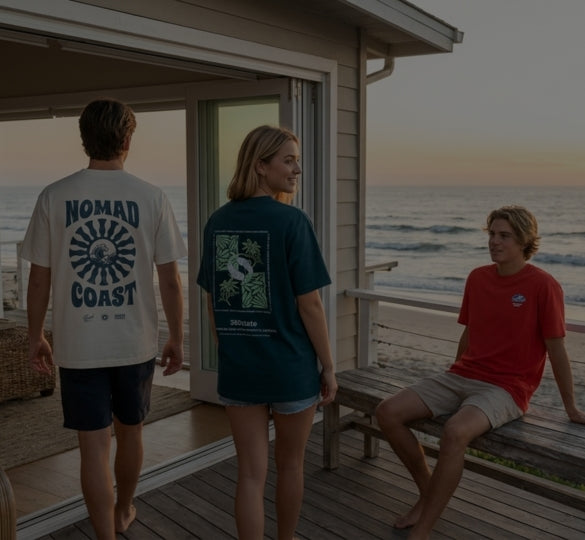
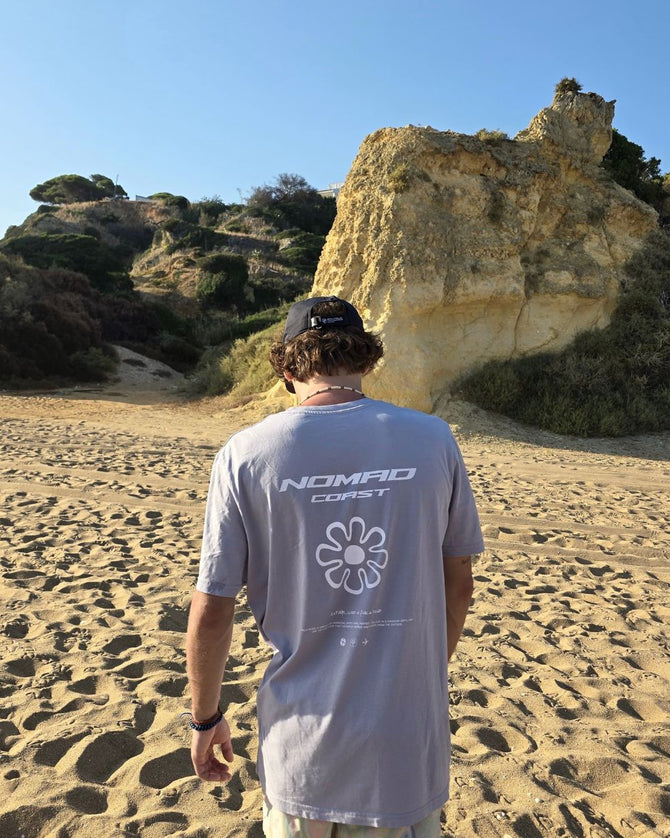
Screen printing remains a popular trend in urban fashion and sustainable clothing , prioritizing high-quality prints and environmental responsibility. Brands like NOMAD COAST use screen printing for limited collections and special editions, ensuring that each garment retains its visual identity for years to come.


DTF printing: The digital revolution in textile printing
How DTF printing works
Direct-to-Film (DTF) is a digital printing process where ink is printed onto a special film and then transferred to the fabric using heat. This technique allows for designs with multiple colors, gradients, and precise details without losing definition, making it ideal for small to medium print runs.
Advantages compared to other techniques
The main advantage of DTF printing is its flexibility: it works on various fabrics (cotton, polyester, blends) and allows for detailed, full-color printing. Furthermore, it is faster and more economical than screen printing for limited runs, without sacrificing durability or color vibrancy.
Recommended uses in fashion and accessories
DTF is perfect for capsule collections, custom t-shirts, and corporate merchandise. Emerging brands and Shopify stores, like NOMAD COAST , use it to produce innovative designs that require detail and speed of production.


Sublimation: Full-color printing for synthetic fabrics
Principles of textile sublimation
Sublimation involves transferring ink to fabric using heat, converting it into a gas that integrates directly into the fibers. This process is only effective on textiles with a high polyester content or special coatings. The result is a print that is invisible to the touch, resistant to wear and washing .
Advantages and limitations
Its advantages include durability, color vibrancy, and the ability to print complex images or photographs. Its main limitation is that it doesn't work well on 100% cotton, so planning is required depending on the type of garment.
Most common applications
Sublimation printing is used on sportswear, accessories, and promotional products. At NOMAD COAST , it's used for colorful designs and high-resolution graphics on technical t-shirts and sweatshirts, standing out for their professional finish and durability for everyday wear.

Comparison of printing types: when to choose each technique
Selection criteria according to the project
Choosing between screen printing, DTF, and sublimation depends on the type of fabric, the number of garments, the design, and the budget. For large runs with solid colors, screen printing is ideal. For intricate details and smaller runs, DTF is more efficient. For synthetic fabrics and full-color graphics, sublimation is unbeatable.
Cost, time and quality
The unit cost varies depending on the technique: screen printing requires an initial investment in screens; DTF offers speed without compromising quality; sublimation allows for premium finishes on polyester. Each method strikes a balance between time, cost, and durability .
Strategic brand recommendations
To strengthen your brand identity, combine techniques according to the collection. NOMAD COAST, for example, uses screen printing for classic pieces, DTF for limited editions, and sublimation for sportswear or technical garments, ensuring visual consistency and customer satisfaction .
Textile printing trends for 2026
Sustainability and ethical fashion
Demand for sustainable textile printing is growing in Europe. Techniques such as screen printing with eco-friendly inks or DTF with low-consumption processes are booming. Brands that commit to responsible methods strengthen their reputation and consumer trust.
Customization and on-demand production
DTF and sublimation facilitate personalization and "print on demand", allowing adaptation to trends without accumulating stock, reducing costs and waste, a key factor in Shopify e-commerce.
Technological innovation in printing
New high-resolution DTF printers and hybrid sublimation systems are transforming the industry. Leading brands, such as NOMAD COAST , are investing in innovation to offer unique designs with professional quality and maximum durability.
FAQ about Types of Textile Printing
What types of printing exist for clothing?
The main types of textile printing are screen printing , DTF , and sublimation . Each technique offers advantages depending on the type of fabric, the design, and the quantity of garments to be produced, from large runs to limited collections.
What is the best textile printing technique?
There's no single best technique; it depends on your needs. Screen printing is ideal for large print runs and solid colors, DTF is perfect for detailed designs and small runs, and sublimation works on synthetic fabrics to print complex, full-color graphics with high durability.
Can cotton be printed using sublimation?
Not directly. Sublimation requires polyester or fabrics with special coatings. For cotton, screen printing or DTF is more recommended, as it offers long-lasting results and vibrant colors.
What advantages does DTF printing have over screen printing?
DTF printing allows for printing designs with multiple colors and gradients in small to medium runs without the need for screen preparation. It is faster and more versatile than screen printing, although for large volumes of solid colors, screen printing remains more cost-effective.
Where can I find quality textile printing?
At NOMAD COAST, we offer garments with professional textile printing using screen printing, DTF, and sublimation. Durable designs, vibrant colors, and techniques tailored to each collection make them ideal for urban fashion, accessories, and sustainable clothing in Spain and Europe.
Choosing the right type of textile printing is key to ensuring quality, durability, and consistency with your brand identity. At NOMAD COAST , we combine screen printing, DTF, and sublimation depending on each collection, offering unique garments that stand out in style and durability.
Explore our collection of printed T-shirts and sweatshirts to discover how high-quality printing can transform your look. You can also read more about our techniques on our sustainable fashion blog and learn about the latest trends in textile printing.