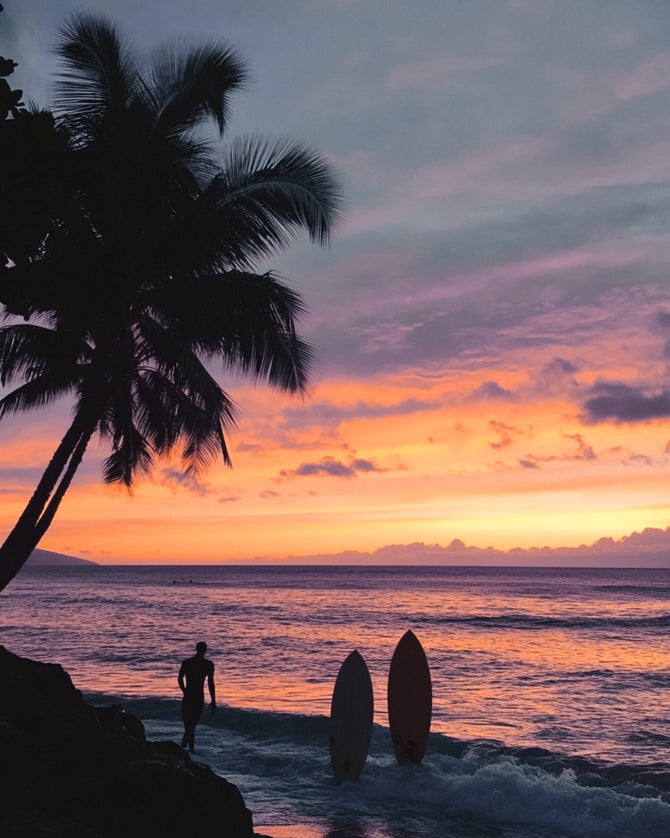



Surfing is much more than a water sport: it's a lifestyle connected to the ocean, nature, and coastal culture. If you're wondering what surfing is , it involves riding ocean waves on a board specifically designed to harness the power of the water.
In recent years, surfing has experienced exponential growth in Spain and Europe, driven by its connection to wellness, outdoor sport, and lifestyle trends. Understanding its history, its different styles, and the types of surfboards will allow you to get started in this world or improve your experience in the water.
In this comprehensive guide from NOMAD COAST you will discover the origin of surfing, its different styles and how to choose the right board according to your level.

Origin and history of surfing
The birth of surfing in Polynesia
Surfing has its roots in ancient Polynesia, especially Hawaii, where it was a cultural and spiritual practice. Local inhabitants used boards carved from solid wood to ride the waves as part of social and religious rituals.
In those days, surfing represented social status and a connection to nature. Tribal chiefs used larger, more elaborate boards, while the common people surfed with simpler models. This cultural link remains fundamental to the philosophy of modern surfing, where respect for the ocean is an essential value.
The global expansion of surfing
At the beginning of the 20th century, surfing began to spread beyond Hawaii thanks to pioneering figures like Duke Kahanamoku, considered the international ambassador of surfing. His influence popularized the sport in the United States, Australia, and later in Europe.
During the 1960s and 70s, surfing underwent a revolution thanks to innovations in materials, such as fiberglass and polyurethane foam, which made boards lighter and more maneuverable. This change spurred the development of different types of surfing and riding techniques.
Evolution of surfing in Spain and Europe
Spain has established itself as one of Europe's top surfing destinations. Areas like the Basque Country, Cantabria, Galicia, and the Canary Islands offer ideal conditions year-round.
Today, surfing is part of the European coastal lifestyle and has influenced fashion trends, travel and outdoor culture, values that inspire the creative universe of NOMAD COAST .

What is surfing and what does this sport involve?
Definition and fundamentals of surfing
Surfing involves paddling on a board to catch a wave and riding it while maintaining balance. Although it may seem simple, it requires coordination, physical stamina, and knowledge of the ocean.
The main objective is to harness the energy of the wave to ride its face, performing turns or maneuvers according to the surfer's skill level. This sport combines technique, physical fitness, and a mental connection with the natural environment.
Physical and mental benefits of surfing
Surfing improves balance, strengthens the core, and increases cardiovascular endurance. Furthermore, it's a sport that promotes relaxation and reduces stress thanks to direct contact with the sea.
Several studies highlight that water sports help improve emotional well-being and concentration, making surfing a complete activity for both body and mind.

Surfing is not just a sport; it also represents a way of life. Surf culture promotes values such as sustainability, respect for the environment, and personal freedom.
At NOMAD COAST , this philosophy is reflected in the design of garments intended to accompany both surf sessions and lifestyle experiences linked to the sea.
Most popular types of surfing
Classic surfing or shortboarding
Shortboarding is the most widespread and competitive style. It uses short boards, generally between 5 and 7 feet, designed for performing fast and radical maneuvers.
This style requires more technique and experience, as shortboards offer less stability but allow for more dynamic movements. It's commonly seen in professional competitions and on beaches with powerful waves.
Longboard and traditional surfing
Longboarding uses long boards, typically over 8 feet. This type of surfing is characterized by fluid and elegant movements, prioritizing style over speed.
It's ideal for beginners due to its stability and ease of paddling. Furthermore, it connects directly with traditional Hawaiian surfing, maintaining its classic essence.

Other types of surfing
There are multiple variations within the types of surfing , including:
-
Paddle surfing (SUP)
-
Bodyboard
-
Tow-in surf
-
Big wave surfing
-
Surf foil
Each modality responds to different sea conditions and experience levels, expanding the possibilities within the world of surfing.
Types of surfboards and their characteristics
Shortboard
Shortboards are designed for advanced surfers looking for maneuverability and speed. They are lightweight and allow for technical maneuvers in fast waves.
Its main disadvantage is the difficulty for beginners, as they require greater balance and technique to stay on the board.
Longboard
The longboard is the most recommended option for beginners in surfing. Its size provides stability and makes catching waves easier.
It is also very popular among experienced surfers looking for a more relaxed and elegant style.

Funboard, fish and softboard
These tables represent intermediate options between stability and maneuverability:
-
Funboard: Balance between longboard and shortboard.
-
Fish: Ideal for small waves and relaxed surfing.
-
Softboard: Recommended for learning due to its safety.
Choosing the right board is key to progressing in surfing and fully enjoying each session.
How to get started in surfing and choose the right equipment
Sea level and conditions
Before starting, it's essential to assess the surfer's skill level and the ocean conditions. Beginners should look for beaches with gentle waves and little rocky bottom.
In addition, having qualified instructors accelerates learning and improves safety in the water.
Basic equipment for surfers
Essential surfing equipment includes:
-
Table appropriate to the level
-
Neoprene according to water temperature
-
Invention or leash
-
Paraffin to improve grip

Tips for improving your surfing
Progress in surfing requires consistency and patience. Practicing paddling, improving your take-off technique, and observing wave behavior are key factors.
It is also recommended to complement surfing with functional training and balance exercises outside the water.
FAQ about What is Surfing
What is surfing?
Surfing is a water sport that involves riding waves on a board designed to harness the energy of the ocean. Beyond being a sport, surfing represents a lifestyle connected to nature, freedom, and coastal culture .
What are the most common types of surfing?
The main types of surfing are shortboarding, longboarding, stand-up paddleboarding (SUP), bodyboarding, and foil surfing. Each style uses different boards and is suited to different experience levels, wave styles, and surfer preferences.
Which surfboard is best for beginners?
To get started in surfing, it's recommended to use softboards or longboards , as they offer greater stability, buoyancy, and safety. These boards make it easier to learn balance, paddling, and the take-off, fundamental aspects for progressing in surfing.
Where can you surf in Spain?
Spain boasts ideal destinations for surfers such as Zarautz, Mundaka, Somo, Pantín, and Fuerteventura . These areas offer waves suitable for different skill levels and are among the top surfing destinations in Europe.
Understanding what surfing is , its history, and its different styles allows you to appreciate a sport that combines technique, culture, and a connection with the ocean. From traditional Hawaiian surfing to modern variations, each style offers unique experiences tailored to different skill levels.
Choosing the right type of surfing and surfboard is essential for progressing and enjoying the sea safely.
At NOMAD COAST, we believe in surfing as a way of life linked to the nomadic spirit and respect for the natural environment. If you want to continue exploring the world of surfing and coastal lifestyle, we invite you to discover our collections and specialized content.
👉 Discover more inspiration on our blog.
👉 Explore our surf & coastal lifestyle collection.