




The conversation about fast fashion and slow fashion is no longer just a trend: it's a consumer choice with a real impact on the planet, the economy, and the way we dress. More and more consumers in Spain and Europe are seeking to understand what goes into the clothes they buy.
In this article, we analyze in depth the differences between both models, the environmental impact of clothing , the environmental consequences of fast fashion , and why slow fashion represents a strategic alternative toward more conscious fashion. If you want to shop smarter, understand what you're supporting with your money, and discover what's behind the price of a t-shirt, this guide is for you.
What is fast fashion and how does it work?
Mass production and accelerated cycles
Fast fashion is based on the rapid, large-scale production of garments inspired by runway trends. Brands like Zara and H&M popularized a model where collections change every few weeks. The goal is clear: to maximize turnover and volume.
This system involves intensive industrial processes, globalized supply chains, and manufacturing in countries with low labor costs. Speed is the central focus of the business.
Low prices and impulsive consumption
Low prices are the main driving force behind fast fashion. By reducing production and material costs, brands can offer clothing at very competitive prices. This encourages impulse buying and disposable consumption.
The problem is that the low price rarely reflects the true environmental or social cost of the garment.
Impact on the perception of the value of clothing
When a t-shirt costs less than a fast-food meal, our perception of value changes. Clothing ceases to be an investment and becomes ephemeral consumption. This model has contributed to a throwaway culture with profound environmental consequences.


What is slow fashion and what makes it different?
Ethical and responsible production
Slow fashion emerged as a response to the accelerated model. It prioritizes fair working conditions, traceability, and limited production. It's not just about making less, but making better.
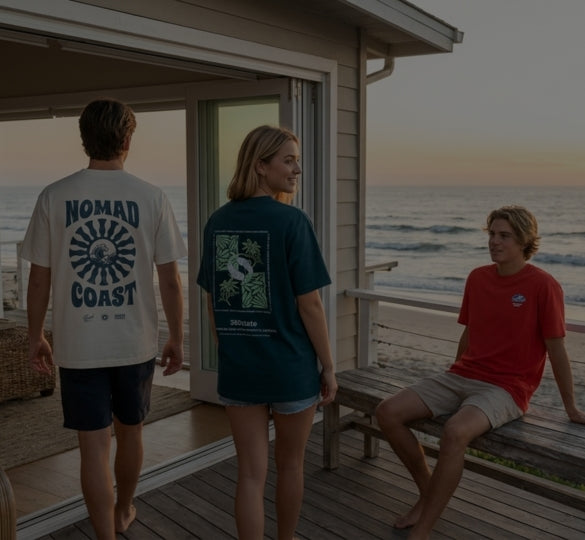
Brands like NOMAD COAST adopt this approach by focusing on quality, durability, and more responsible processes.
Sustainable and durable materials
Slow fashion favors natural, organic, or recycled fibers. Organic cotton, European linen, and recycled fabrics reduce the environmental impact of clothing in terms of water consumption, chemicals, and emissions.
Durability is key: a garment designed to last five years significantly reduces its footprint per use.
Conscious consumption and capsule wardrobe
This model promotes buying less and choosing better. The capsule wardrobe concept—versatile and timeless garments—aligns with true sustainability.
It's not about boring fashion, but about intentional, functional design with identity.


Fast fashion and its environmental impact
Water consumption and pollution
The textile industry is one of the most polluting in the world. According to data from the European Parliament , textile production generates large amounts of CO₂ emissions and consumes a significant amount of water.
Conventional cotton, for example, requires thousands of liters of water per kilogram produced. Furthermore, the dyes and chemicals used pollute rivers and ecosystems.
Textile waste and landfills
Millions of tons of textile waste are discarded in Europe every year. Many fast fashion garments have a very short lifespan and end up in landfills or incinerators.
The environmental consequences of fast fashion include the accumulation of microplastics and the slow degradation of synthetic fibers.
Carbon emissions and global transport
Offshoring production involves constant intercontinental transport. The volume-based model multiplies the carbon footprint, from manufacturing to distribution.
Reducing distance and producing locally is one of the keys to European slow fashion.
Environmental consequences of fast fashion in Europe
Regulation and legislative pressure
The European Union is promoting circular economy strategies that will directly affect the textile sector. Extended producer responsibility will become increasingly demanding.
Brands that do not adapt their model could face higher regulatory costs.
Change in consumer behavior
European consumers are becoming increasingly discerning. Transparency, traceability, and sustainability influence their purchasing decisions.
The search for terms like “sustainable fashion” and “environmental impact of clothing” continues to grow, reflecting a structural change in the market.
Reputation and branding
Brands associated with fast fashion face increasing reputational risks. In contrast, those that commit to ethical production strengthen their premium positioning and brand authority.
How to choose between fast fashion and slow fashion
Analyze materials and composition
Read labels. Prioritize natural, recycled, or certified fibers. Avoid synthetic blends whenever possible.
Evaluate the durability and design
A timeless and well-made garment has less impact from use than five cheap garments replaced every season.
Choose brands with clear values
Look for transparency: origin of manufacture, materials, and processes. On the NOMAD COAST blog, you can delve deeper into our responsible production philosophy and discover our collections designed to last.
FAQ about Fast Fashion and Slow Fashion
What is the difference between fast fashion and slow fashion?
The main difference between fast fashion and slow fashion is the production model. Fast fashion is based on manufacturing large volumes of clothing quickly and at low cost, following changing trends. In contrast, slow fashion prioritizes quality, durability, ethical production, and the use of sustainable materials, thus reducing environmental impact.
What environmental impact does fast fashion have?
Fast fashion and its environmental impact are linked to high water consumption, CO₂ emissions, pollution from chemical dyes, and the massive generation of textile waste. Many garments have a short lifespan and end up in landfills, increasing the environmental consequences of fast fashion in Europe and globally.
Is slow fashion really more sustainable?
Yes. Slow fashion reduces the environmental impact of clothing by prioritizing organic or recycled materials, responsible production, and timeless designs that last for years. By buying less and choosing better, consumers reduce their ecological footprint and promote a fairer, more circular fashion model.
How to reduce the environmental impact of clothing?
To reduce the environmental impact of clothing , it's advisable to buy higher-quality garments, choose ethically produced brands, select sustainable fabrics, and extend the lifespan of each item through proper care. Adopting a slow fashion mindset is one of the most effective ways to consume fashion responsibly.
Understanding the differences between fast fashion and slow fashion is the first step toward smarter, more responsible consumption. The environmental impact of clothing is not an abstraction: it is a measurable reality that affects ecosystems, resources, and communities.
The future of fashion in Europe is moving towards more sustainable, transparent, and responsible models. At NOMAD COAST, we believe in garments designed to last, produced with care, and made to last beyond a single season.